Introduction
When most people look at a website, they notice the design. They see the colours, the logo, the images and perhaps a few pieces of text. If everything looks professional, they assume the website is doing its job.
Google doesn't see any of that.
Neither do modern AI systems.
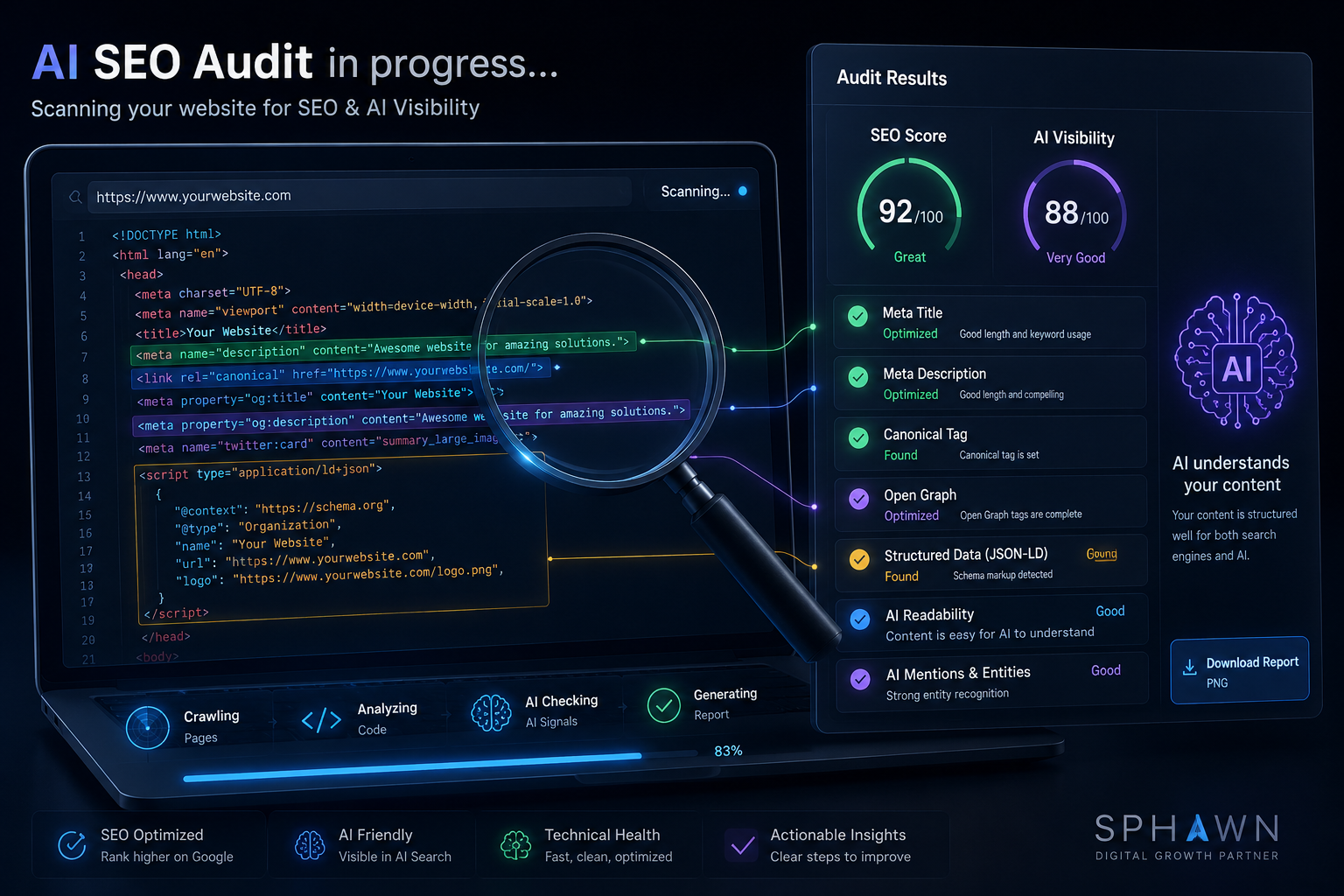
Search engines and AI tools look at a website from a completely different perspective. They try to understand what the website is about, how it is structured, how fast it loads and whether the information can be trusted.
This difference is important because before a potential customer ever visits your website, Google and AI have already formed an opinion about it.
Chapter 1 – The Website You See Is Not the Website Google Sees
Many business owners judge a website by its appearance. While design matters for visitors, it is only one small piece of the puzzle.
Google cannot appreciate a beautiful colour palette. It does not care whether an animation looks modern or whether a section feels elegant. Instead, it focuses on understanding the content and structure of a page.
It asks questions such as:
What is this page about?
Who is it written for?
Does it answer a real question?
Can users find the information quickly?
A website that looks impressive but lacks clarity often performs worse than a simpler website that communicates clearly.
This is one of the reasons why some businesses rank surprisingly well while others remain invisible despite having a more expensive website.
Chapter 2 – How AI Systems Read a Website
AI-powered search is changing the way people discover information online.
Tools such as ChatGPT Search, Google AI Overviews, Gemini and Perplexity no longer rely only on keywords. They try to understand context, meaning and relationships between pieces of information.
Instead of asking whether a page contains specific words, AI systems increasingly ask whether the page genuinely answers the user's question.
This means that websites written for humans often perform better than websites written purely for search engines.
Clear explanations, logical structure and useful information help AI systems understand a website more accurately.
In many ways, the future of search is becoming less technical and more human.
Chapter 3 – Why Similar Websites Produce Different Results
It is common to see two businesses offering nearly identical services and getting very different results online.
The difference is rarely luck.
One website might explain exactly who it helps, what it offers and how the process works. The other may rely on generic marketing phrases that sound impressive but provide little value.
To a visitor, both websites may look professional.
To Google and AI systems, however, the difference is significant.
The first website creates clarity. The second creates uncertainty.
Over time, clarity tends to win.
Search engines want to recommend pages that help users find answers. AI systems want to reference sources they can understand and trust.
Websites that communicate clearly are naturally better positioned for both.
Chapter 4 – How to Discover What Google and AI Actually See
One of the biggest challenges for website owners is that they evaluate their own websites from the inside.
They already know their business.
They already understand their services.
They already know what they mean.
Visitors, search engines and AI systems do not have that advantage.
This is why regular website audits are important.
An audit can reveal issues that are invisible during everyday use. Slow loading times, missing SEO elements, unclear structure or weaknesses that affect how search engines and AI systems interpret a website.
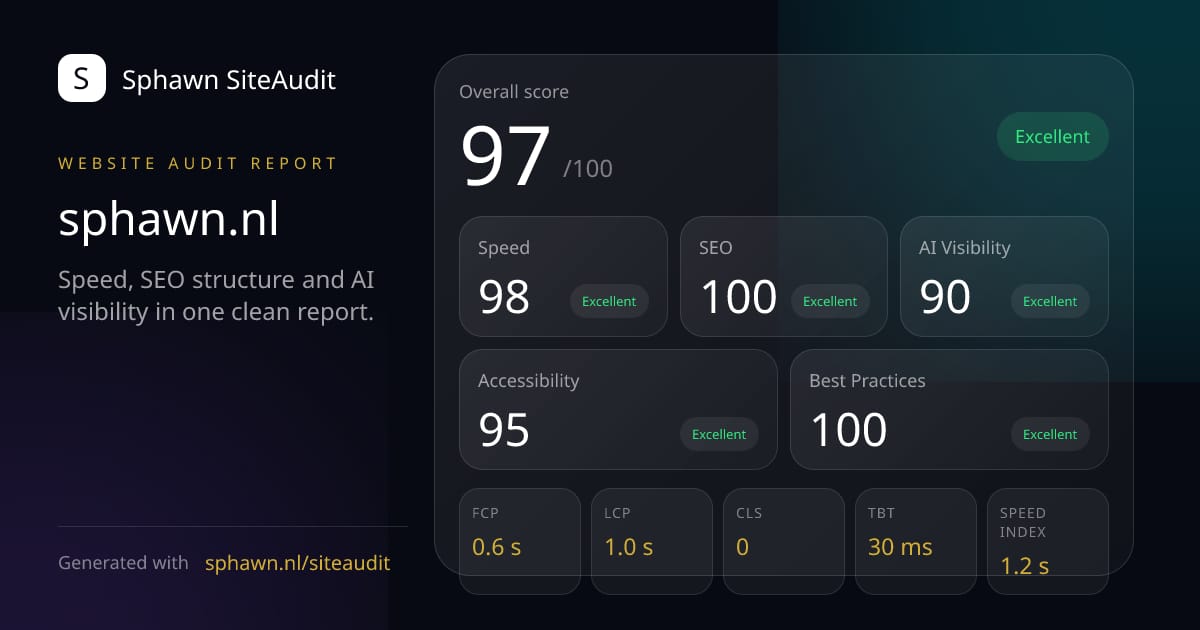
This is also why we built SiteAudit.
Instead of focusing only on technical metrics, SiteAudit provides an easy-to-understand overview of website performance, SEO structure and AI visibility. The goal is simple: help website owners understand how their site is perceived beyond the surface.
Conclusion
What people see when they visit your website matters.
What Google and AI understand about your website matters just as much.
Before a visitor reads your content, clicks a button or sends a message, search engines and AI systems have already evaluated the information available on your website.
The good news is that success online is rarely about tricks or shortcuts.
Clear information, strong structure and a useful experience remain the foundations of a website that performs well today and will continue to perform well in the future.
If you haven't already, you may also enjoy reading our articles "Why a Website?" and "Why Your Website Doesn't Bring Clients". In the next article, we'll explore another important topic: how a security audit can reveal hidden risks that affect both trust and performance.